Type 2 diabetes is one of Australia’s most common chronic health conditions, yet many people don’t realise they have it.
It’s estimated that for every Australian diagnosed with type 2 diabetes, another person is living with the condition but remains undiagnosed. That’s because type 2 diabetes often develops gradually, and many people have no symptoms at all.
The good news is that understanding your health early provides an opportunity to make positive changes that can improve your wellbeing now and help protect your health into the future.
What is type 2 diabetes?
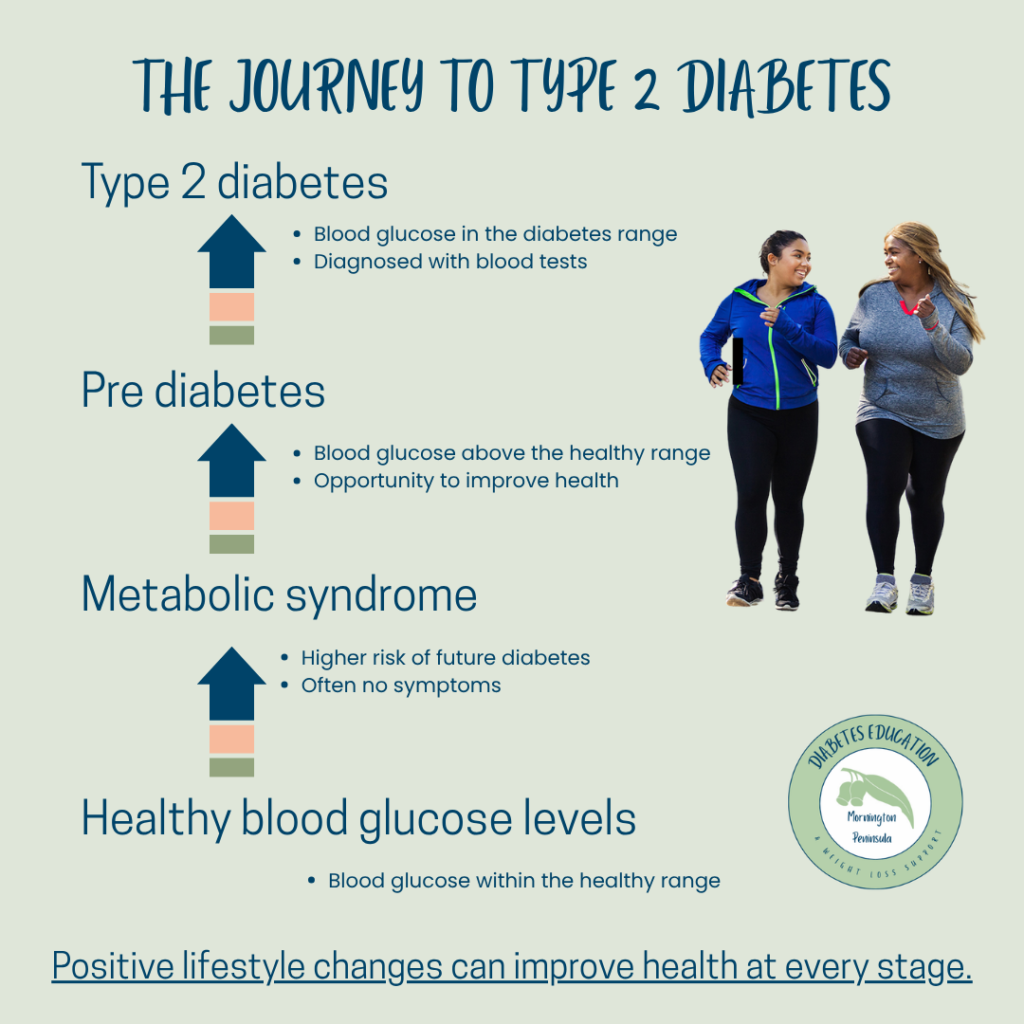
Type 2 diabetes develops when the body can no longer keep blood glucose levels within a healthy range. This usually happens gradually over many years.
For many people, blood glucose levels begin to rise slowly before reaching the diabetes range. This is known as pre-diabetes. Blood glucose levels are above the healthy range but are not yet high enough for a diagnosis of type 2 diabetes.
Pre-diabetes is an opportunity to better understand your health and make changes that can improve your current and future health. Healthy eating, regular physical activity, building muscle, improving sleep and, for many people, losing some weight can all improve how the body manages blood glucose and may delay or prevent progression to type 2 diabetes.
As blood glucose levels continue to rise, they may eventually reach the range where type 2 diabetes is diagnosed.
What is metabolic syndrome?
Before developing type 2 diabetes, many people have metabolic syndrome.
Metabolic syndrome isn’t a disease itself. It’s a collection of health factors that commonly occur together and increase the risk of developing type 2 diabetes and cardiovascular disease.
Many people don’t realise they have metabolic syndrome because it doesn’t usually cause symptoms. It’s often identified during a routine health check, making it an opportunity to better understand your health before diabetes develops.
These factors include:
- A larger waist circumference
- Raised blood pressure
- Raised blood glucose levels
- Raised LDL cholesterol and/or triglycerides
- Lower HDL cholesterol
- Physical inactivity
- Smoking
Improving even one or two of these factors can have a positive impact on your health.
Who is at higher risk?
Your risk of developing type 2 diabetes is higher if you:
- Have a parent, brother or sister with type 2 diabetes
- Have had pre-diabetes or gestational diabetes
- Carry excess weight, particularly around your waist
- Are physically inactive
- Have high blood pressure or abnormal cholesterol levels
- Smoke
- Have polycystic ovary syndrome (PCOS)
- Are over 40 years of age
- Are of Aboriginal or Torres Strait Islander, Pacific Islander, Māori, Asian or South Asian background
Having one or more of these risk factors doesn’t mean you’ll definitely develop type 2 diabetes, but it does mean regular health checks are worthwhile.
If you’re unsure about your risk, I encourage you to read my previous article, “Could You Be at Risk of Type 2 Diabetes and Not Even Know It?”, which explains the Australian AUSDRISK assessment tool and how it can help identify your future risk of developing type 2 diabetes.
Why can type 2 diabetes go unnoticed?
Many people with type 2 diabetes feel completely well when they are diagnosed.
Others may notice symptoms only when blood glucose levels become quite high.
How you feel doesn’t necessarily reflect your blood glucose levels or overall health. That’s why routine health checks are recommended for people with risk factors.
What symptoms can occur?
Some people experience:
- Increased thirst
- Passing urine more often, particularly overnight
- Feeling more tired than usual
- Blurred vision
- Cuts or wounds that take longer to heal
- Frequent skin, urinary or thrush infections
- Unexplained weight loss, although weight gain is more commonly seen before diagnosis
Many people, however, have no symptoms at all.
How is type 2 diabetes diagnosed in Australia?
Your GP or Nurse Practitioner may request blood tests to determine whether your blood glucose levels are:
- Within the healthy range
- In the pre-diabetes range
- In the type 2 diabetes range
If your blood test results are in the diabetes range and you don’t have symptoms, the diagnosis is usually confirmed with two blood test results on separate occasions.
These tests may include:
- HbA1c (glycated haemoglobin): 6.5% (48 mmol/mol) or higher; reflects your average blood glucose over the previous 2–3 months.
- Fasting venous blood glucose: 7.0 mmol/L or higher; measures your blood glucose after fasting for at least 8 hours and reflects how your body regulates blood glucose overnight, including the important role of the liver.
- Oral glucose tolerance test (2-hour glucose): 11.1 mmol/L or higher; measures how your body responds to a glucose drink over two hours.
- Random (venous) plasma glucose: 11.1 mmol/L or higher; measures your blood glucose at any time of the day.
Each of these tests measures blood glucose in a different way. A result in the diabetes range that is confirmed according to Australian guidelines is enough to diagnose type 2 diabetes—you don’t need every test to be in the diabetes range.
When is one blood test enough?
If you have typical symptoms of diabetes together with a blood glucose result in the diabetes range, one blood test is usually enough to confirm the diagnosis and begin treatment.
Understanding your health
A diagnosis of type 2 diabetes isn’t something to fear—it’s information that helps explain what’s happening in your body.
Whether you have metabolic syndrome, pre-diabetes or type 2 diabetes, every positive change you make today can improve your health and reduce your future risk of complications.
Healthy eating, regular physical activity, building muscle, improving sleep, managing stress and, when appropriate, medication all have a role to play. You don’t have to make every change at once—small, sustainable steps can make a meaningful difference over time.
As a Diabetes & Obesity Nurse Practitioner, I can assess your risk, request and interpret pathology tests, diagnose type 2 diabetes, prescribe medication when appropriate, and work collaboratively with your GP and other healthcare professionals to provide personalised care.
Together, we can help you better understand your health and develop a personalised plan that supports your wellbeing now and into the future.