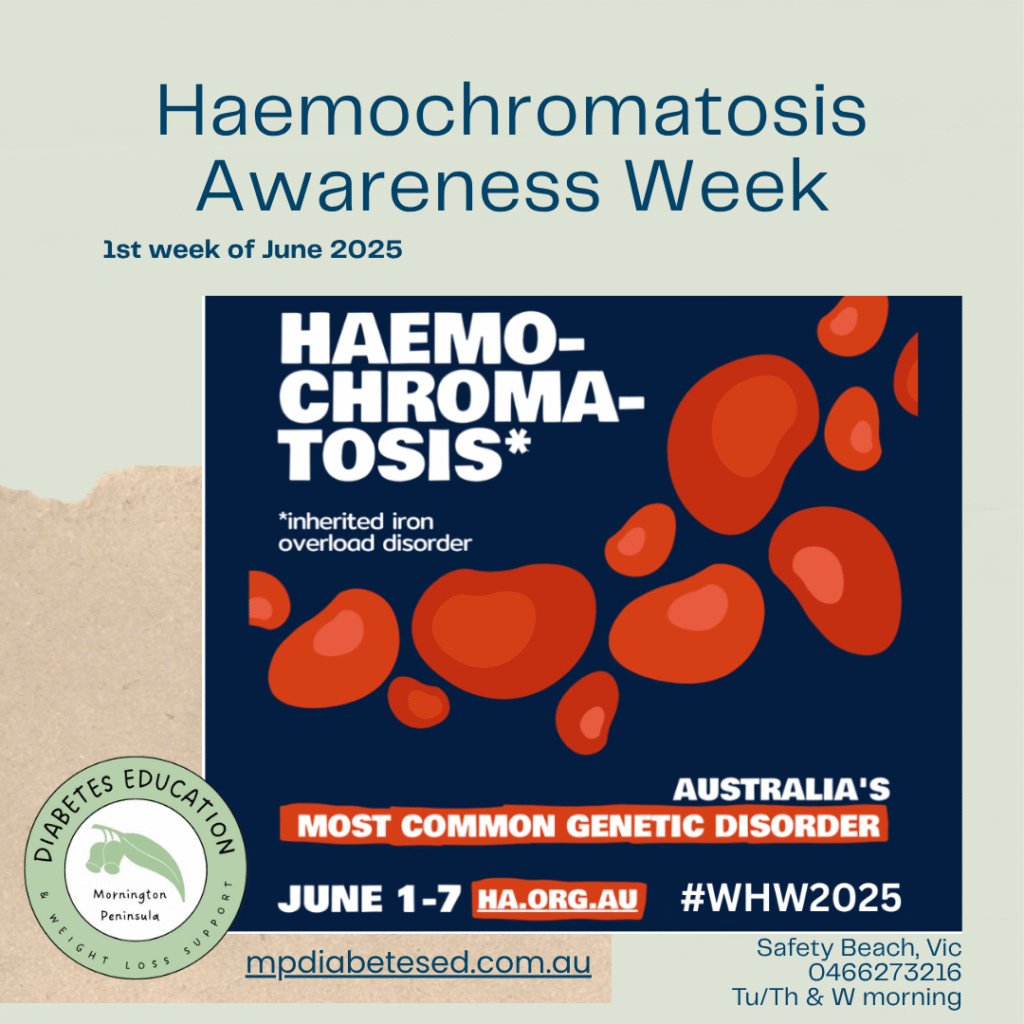
Haemochromatosis is a common inherited condition in Australia, especially among people with northern European ancestry. It causes the body to absorb too much iron from food. Over time, this extra iron builds up and can damage organs if left untreated.
Most people know low iron can cause problems—but too much iron can also lead to serious health issues, and it often goes unrecognised. The signs can be subtle and are easily mistaken for other conditions.
Both men and women can be affected. Women may notice symptoms later in life due to natural iron loss during their younger years, but some are affected earlier.
The positive news is that if picked up early, haemochromatosis is straightforward to treat. Early diagnosis can help you stay well and enjoy a healthy, active life.
If you’re feeling unusually tired or unwell, it might be worth checking your iron levels. A simple blood test could make all the difference.
Further information can be found at :