
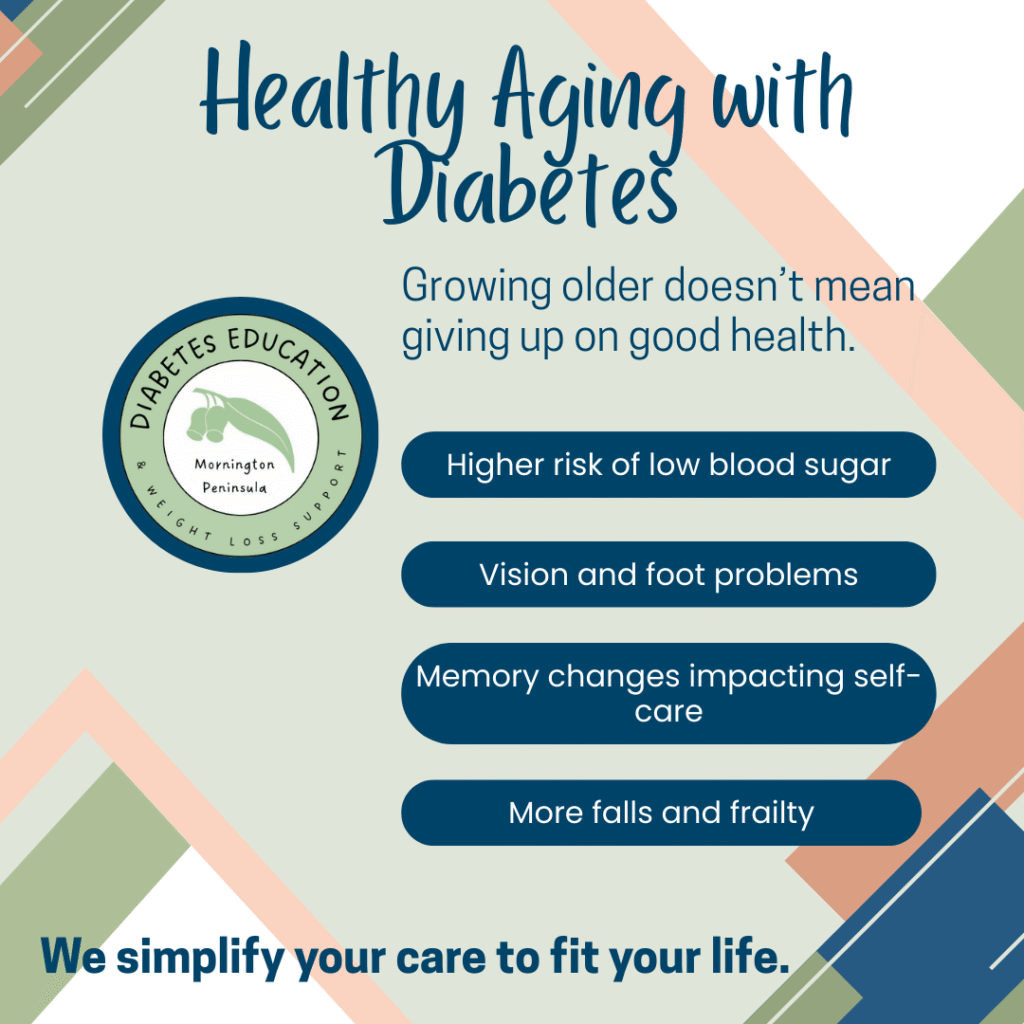
Diabetes in Older Adults
Age-Specific Challenges:
Hypoglycaemia risk:
- Increased due to altered kidney function, medication sensitivity, and irregular eating.
Cognitive decline:
- Can impair self-management (e.g., insulin use, hypo management).
Complications:
- Long-standing diabetes increases risk of vision loss, neuropathy, foot ulcers,
and kidney disease.
Co-existing conditions:
- Cardiovascular disease, frailty, depression, etc.
Increased risk of falls:
- Due to poor glycaemic control, neuropathy, and balance issues.
Diabetes Nurse Practitioner Role:
Simplify regimens to prioritise safety and quality of life
Educate carer’s/family where self-care is limited
Set realistic targets tailored to frailty, cognition, and life expectancy
You’re not alone on this journey.