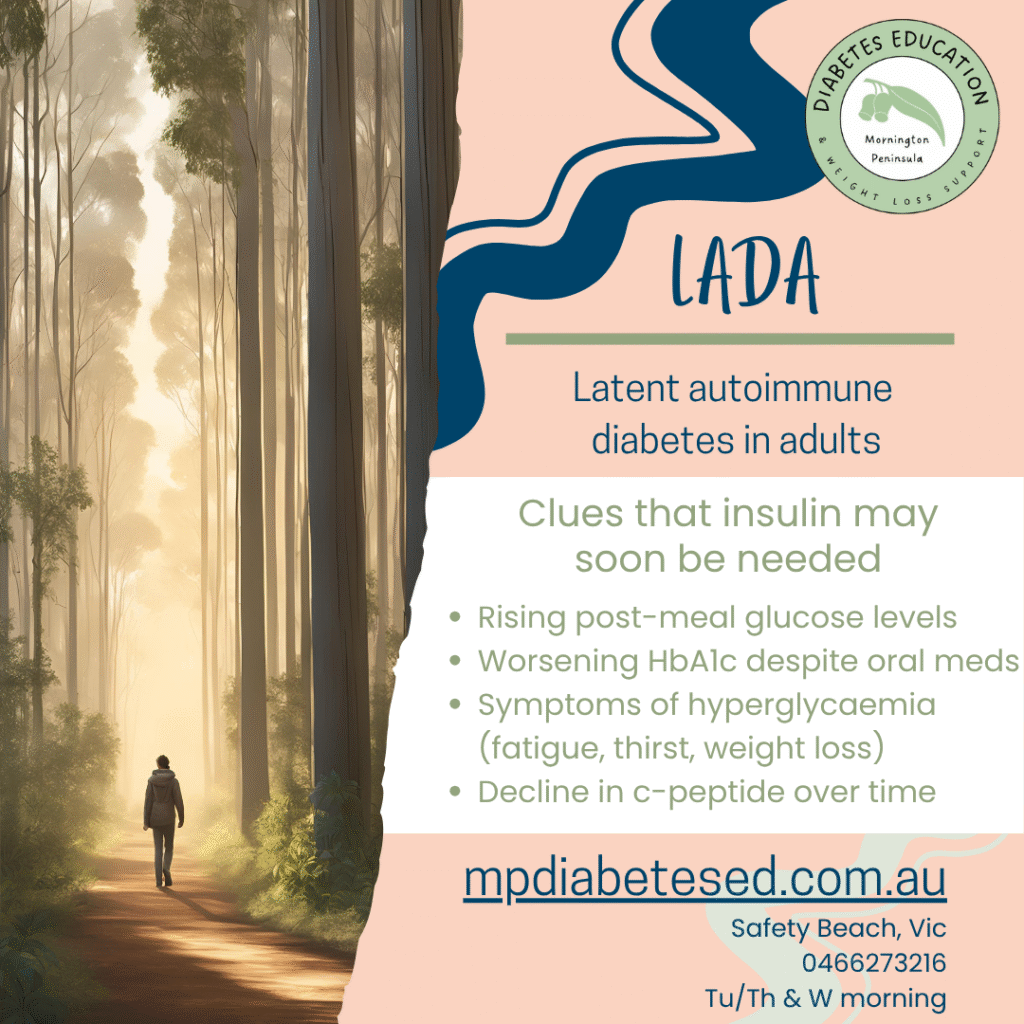
LADA (Latent Autoimmune Diabetes in Adults) is an autoimmune form of diabetes
– a slow-developing type 1 that usually starts in adulthood.
Because it can initially respond to tablets, it’s often mistaken for type 2 diabetes. It may not routinely be screened for.
Why it’s missed:
Develops gradually, often after age 30
Early symptoms are mild and respond to lifestyle or tablets like Metformin initially.
Requires specific antibody tests and careful monitoring of glucose and c-peptide levels.
Who to screen?
Anyone with a personal or family history of autoimmune diseases, like type 1 diabetes, Hashimoto’s, Graves’, or coeliac disease
People diagnosed with type 2 diabetes but with unusual blood sugar patterns or poor tablet response.
Those with lean body type and healthy lifestyle that don’t fit the metabolic picture of type 2.
Or fluctuating blood sugars, especially post-meal despite optimising self care changes.
Managing LADA:
Early diagnosis means insulin may not be needed immediately. Using tools like continuous glucose monitoring (CGM) and regular c-peptide tests helps track your insulin production over time.
Many people can manage with Metformin and lifestyle changes for 6 months to 5 years before insulin becomes necessary. This varies.
Over time, the autoimmune process gradually destroys insulin-producing beta cells.
Once c-peptide levels fall significantly, the person becomes insulin-dependent — similar to classic type 1 diabetes.
A diabetes nurse practitioner can personalise treatment and support gradual transitions to insulin.
If your diabetes feels different from the usual, it might be LADA — and that’s okay. Getting the right screening and advice can make all the difference.
Mornington Peninsula Diabetes Education and Weight Loss Support
– Supporting your unique diabetes journey with understanding and care.