For every person diagnosed with type 2 diabetes, it’s estimated that one person remains undiagnosed.
This means about 50% of all people with type 2 diabetes may not yet know they have it.
This ratio (1 diagnosed : 1 undiagnosed) has been consistent in several Australian studies, including findings from the AusDiab study, although it may vary slightly depending on the population and screening methods used.The AUSDRISK tool is a quick, simple questionnaire that helps estimate your risk of developing type 2 diabetes over the next 5 years.
Why use it?
Type 2 diabetes often develops silently. In fact, for every person diagnosed, another person may be walking around undiagnosed. Early signs are easy to miss, but the sooner you know your risk, the more choices you have.
How does it work?
Just 10 questions—things like your age, waist size, and lifestyle. It takes 2–3 minutes.
How to interpret the score:
Low risk (under 6): keep doing what you’re doing.
Intermediate risk (6–11): time to check in and consider some small changes.
High risk (12 or more): doesn’t mean you have diabetes—but it does mean it’s time to act.
It’s not about fear—it’s about finding out where you stand, and what you can do next.
Use the tool here:
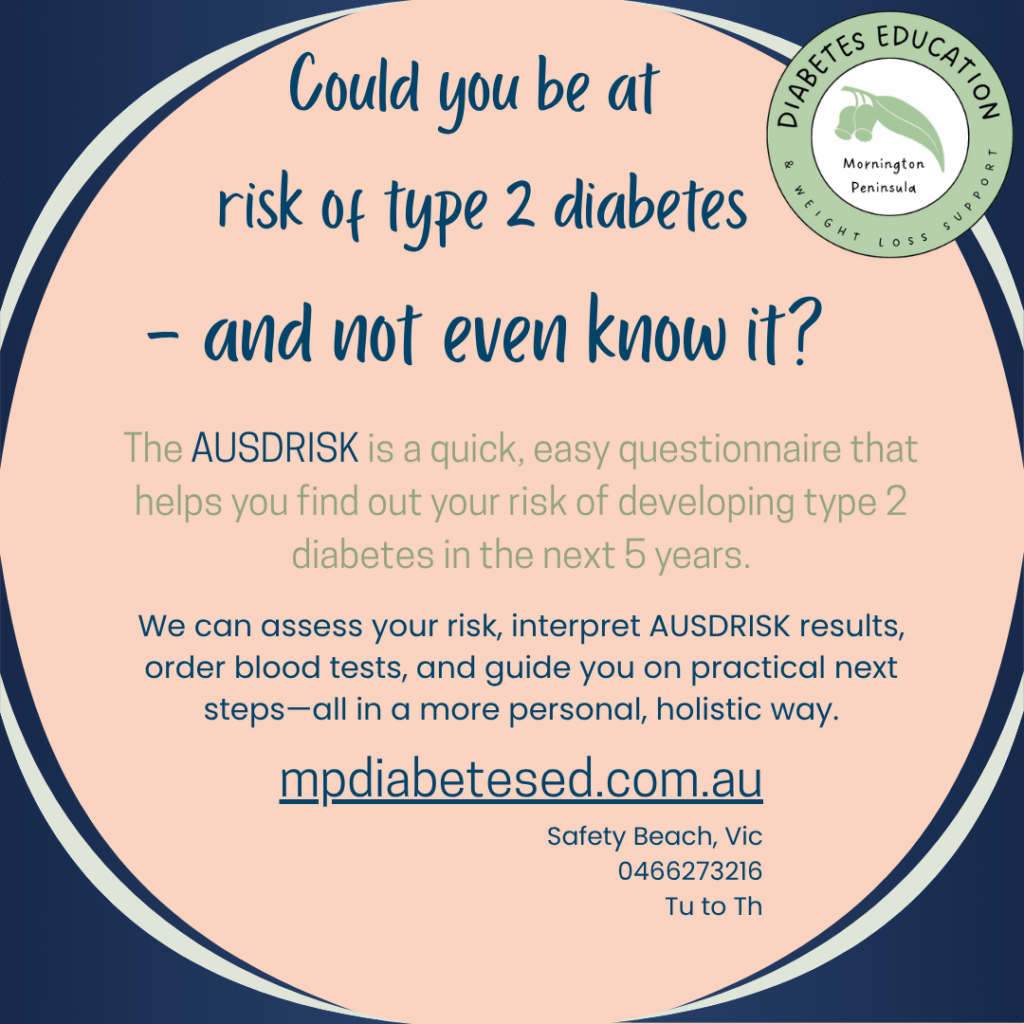
We can assess your risk, interpret AUSDRISK results, order blood tests, and guide you on practical next steps—all in a more personal, holistic way.