
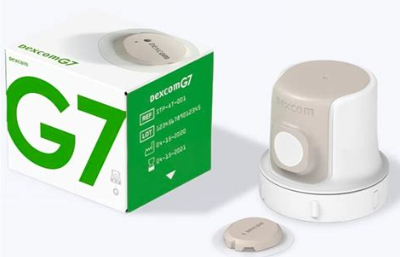
Continuous glucose monitors (CGMs) are becoming increasingly common in diabetes care. These devices measure glucose levels in interstitial fluid (the fluid surrounding cells), rather than directly measuring blood glucose levels.
For people living with Type 1 diabetes, CGM technology has been transformative. Increasingly, people with Type 2 diabetes are also asking whether CGMs may be helpful for them.

What Does a CGM Show?
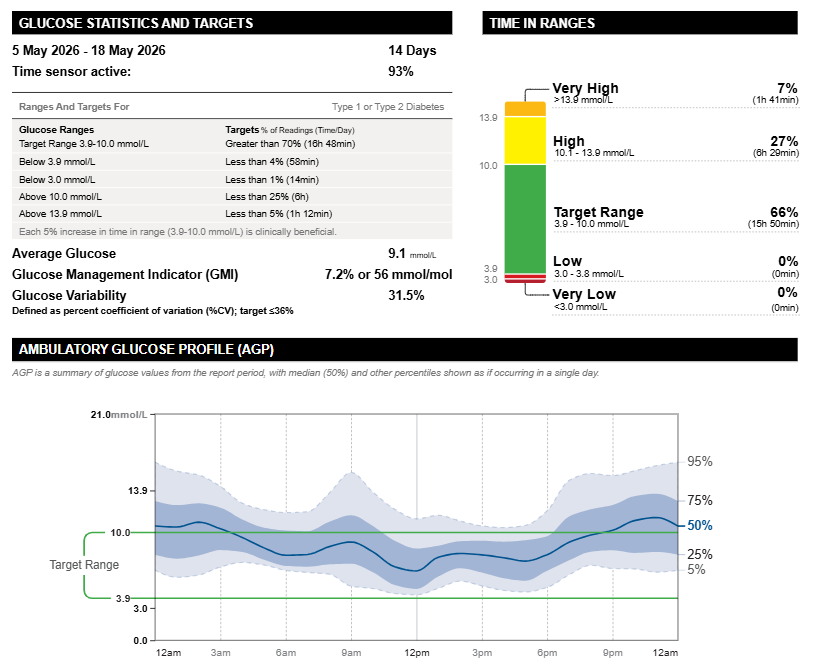
A CGM provides trends and patterns throughout the day and night rather than a single glucose reading. It can help identify:
- Overnight glucose patterns
- Responses to meals
- Effects of exercise
- Glucose variability across the day
- Episodes of low glucose levels
- “Time in Range” — the percentage of time glucose levels remain within target range
This information can sometimes provide insights beyond HbA1c alone.
Who May Benefit From CGM in Type 2 Diabetes?
CGM can be very helpful in selected situations, including:
- People using insulin
- Those experiencing hypoglycaemia or possible unrecognised hypos
- Significant glucose variability
- Difficulty achieving fasting glucose targets
- Shift workers or people with irregular schedules
- During medication changes
- To better understand meal responses
- Highly motivated individuals wanting short-term feedback to support behaviour change
Some people find that seeing glucose trends in real time helps connect lifestyle choices with glucose outcomes in a practical and meaningful way.
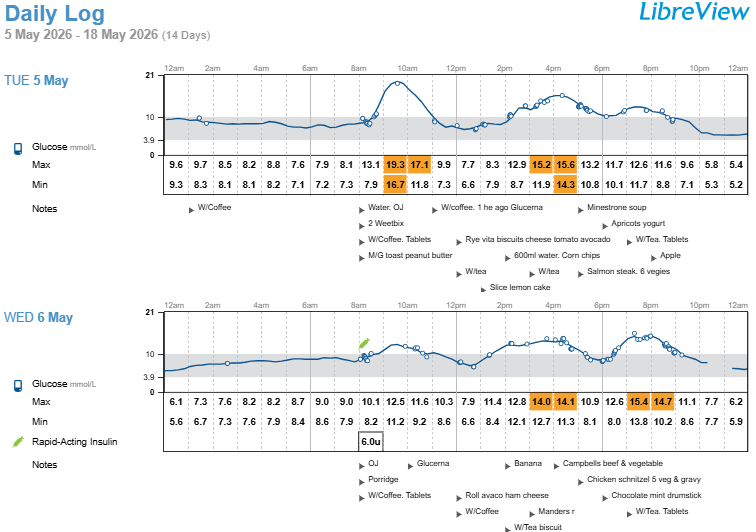
CGM can also sometimes help identify patterns such as:
- Overnight hyperglycaemia
- Post-meal glucose spikes
- Effects of stress or illness
- Exercise-related glucose changes
Not Everyone Needs Continuous Monitoring
Current Australian guidelines do not recommend routine glucose monitoring for everyone with Type 2 diabetes, particularly when glucose levels are stable and there is low risk of hypoglycaemia.
There has also been growing interest on social media in CGM use for people without diabetes. While this technology can provide interesting information, there is currently limited evidence that routine CGM use in otherwise healthy individuals improves long-term health outcomes.
A person without diabetes will generally not experience the same degree of glucose excursions and variability seen in diabetes. Even in people without diabetes, glucose levels may temporarily rise following high GI foods, stress, illness or medications such as steroids. This does not necessarily indicate diabetes or mean ongoing glucose monitoring is required.
Curiosity about health is positive. However, it is important to distinguish between emerging theories, marketing claims and well-established evidence-based care.
More data is not always more helpful. Many online claims around glucose “spikes” simplify very complex physiology and often lack strong clinical evidence.
Importantly, long-term health outcomes are still most strongly influenced by sustainable lifestyle habits, including:
- Choosing balanced meals and higher fibre, lower GI carbohydrates
- Regular physical activity
- Adequate sleep
- Stress management
- Maintaining social connection and overall wellbeing
These foundations remain beneficial with or without CGM use.
Not everybody needs continuous monitoring, and more technology is not always better.
There is also increasing discussion around the environmental impact of single-use medical technologies and device waste. As healthcare providers and consumers, thoughtful and clinically appropriate use of medical technology is an important part of broader social and environmental responsibility.
Cost and Access in Australia
For many people with Type 2 diabetes, cost remains a significant barrier. In Australia, CGM subsidies are currently limited to specific eligible groups, meaning many individuals with Type 2 diabetes need to self-fund the technology.
For some people, regular HbA1c monitoring alongside routine clinical review may be sufficient to identify early changes in glucose management and guide treatment decisions.
In selected situations, a short-term CGM trial used alongside diabetes education may provide helpful insight into glucose patterns, meal responses and daily routines. This can support greater understanding, confidence and self-management skills without necessarily requiring ongoing long-term use.
CGM is one tool within diabetes care, however long-term outcomes continue to rely on sustainable lifestyle habits, education, confidence and individualised management.
The Bottom Line
CGM can be a valuable tool for some people living with Type 2 diabetes, particularly when used with clear goals and appropriate clinical support.
However, diabetes management is not about achieving “perfect” numbers. The focus should remain on realistic, sustainable strategies that support long-term health and quality of life.