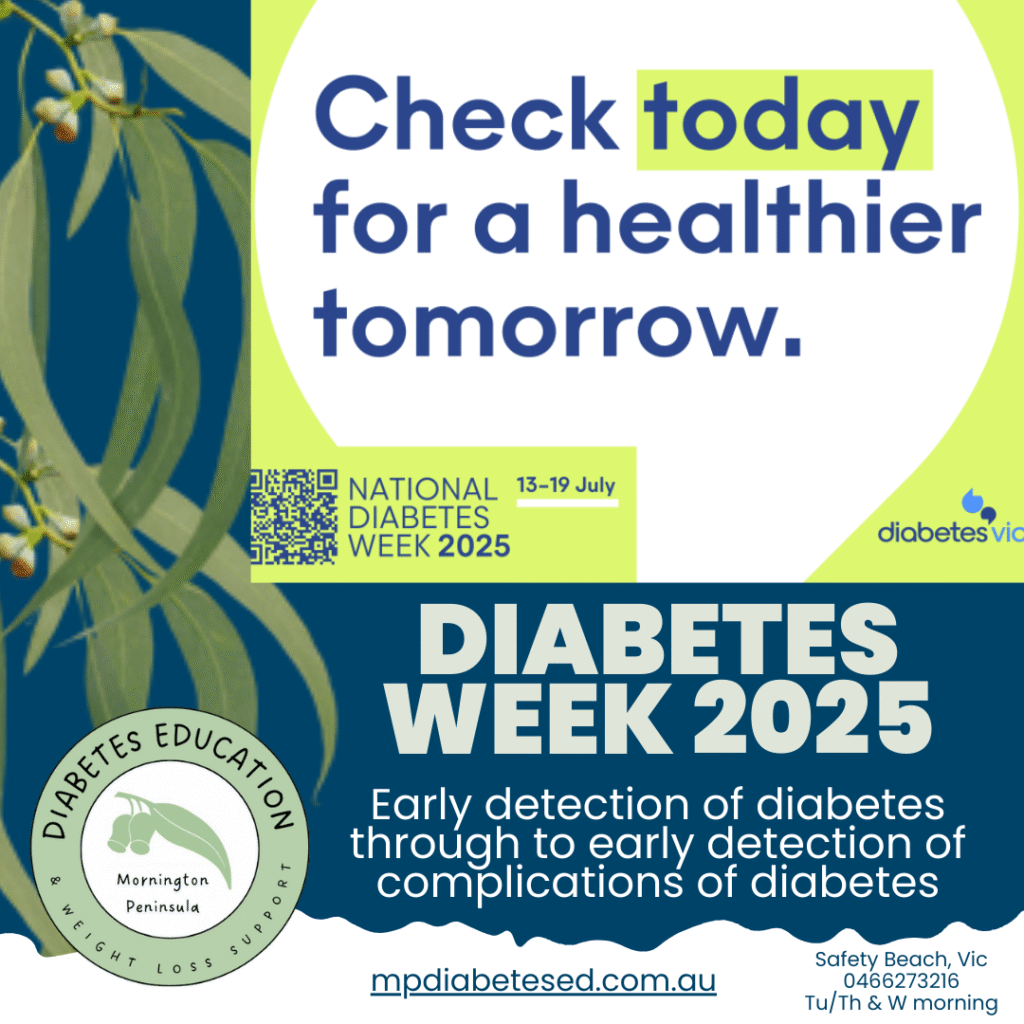
Diabetes Week is a time to highlight the power of prevention — from lowering the risk of type 2 diabetes to supporting those living with any type of diabetes to reduce complications.
Reducing the risk of developing type 2 diabetes:
- Know your risk – tools like AUSDRISK can help
- Make small, sustainable changes to eating and movement habits
- Aim for gradual, healthy weight loss if living with overweight
- Prioritise quality sleep and manage stress
- Stay connected with your healthcare team for regular check-ups
Living with diabetes? Steps to reduce risk of complications:
- Keep blood glucose, blood pressure and cholesterol in target range
- Attend regular checks – eyes, feet, kidneys and heart health
- Understand your condition and what affects your levels
- Take medications as prescribed and review regularly
- Act early – small steps can prevent long-term damage
Focus on health, not just disease
- Shift the mindset from restriction to possibility
- Focus on what you can do
- What’s possible with the right support and choices
- What actions build strength, energy and confidence
- How to live well, rather than just avoid problems
- Support strength, function and confidence in daily life
- Living well with diabetes is possible — health is more than numbers
Let’s work toward reducing the burden of diabetes and creating a future focused on health and quality of life.